Mulled wine, gingerbread, fairy lights and wooden stalls: a pre-Christmas trip to a market is one of the favourite short getaways from Krakow. Before you buy your ticket, check one practical thing. When it comes to Christmas markets currency depends on the country, and in several popular cities you cannot pay in euros. In this guide we explain how to pay in Vienna, Prague, Budapest, Dresden, Berlin and Bratislava.
Many market stalls now accept cards, but cash is still handy for small purchases. A mug of mulled wine, a sausage or a small ornament are the kind of things where handing over a banknote is quicker than waiting for the card terminal.
Christmas markets currency in popular cities
Of the six cities most often chosen by travellers from Krakow, four use the euro. In Prague you need Czech korunas, and in Budapest Hungarian forints. Some stalls in these two cities accept euros, but usually at a poor conversion rate, and they give change in the local currency.
| City | Country | Currency | Code |
|---|---|---|---|
| Vienna | Austria | euro | EUR |
| Prague | Czech Republic | Czech koruna | CZK |
| Budapest | Hungary | forint | HUF |
| Dresden | Germany | euro | EUR |
| Berlin | Germany | euro | EUR |
| Bratislava | Slovakia | euro | EUR |
Vienna, Dresden, Berlin and Bratislava: euros
Austria, Germany and Slovakia all use the euro, so one currency covers several destinations. The Vienna market in front of the City Hall, the Dresden Striezelmarkt, considered one of the oldest in Germany, Berlin's markets in various districts and the Bratislava market in the Old Town are all places where euro cash will come in handy at every turn.
Markets in Austria and Germany often charge a deposit for the mulled wine mug. You pay it when you buy your drink and get it back when you return the mug. You can also keep the mug as a souvenir. That is a good reason to carry small coins and low-value banknotes.
Bratislava is an interesting option if you want to combine a market with a short trip without a long journey. Slovakia uses the euro, so if you have currency left over after a trip to Vienna, you can spend it there too. The same goes for Germany: euros from a visit to Dresden will be useful in Berlin, and you can keep any leftovers for your next trip or sell them back at an exchange office when you return. Just remember that exchange offices usually buy banknotes, not coins, so spend your small change on the spot.
If you are planning several such trips, check our guide to exchanging euros in Krakow, where we explain what to look out for when buying this currency.
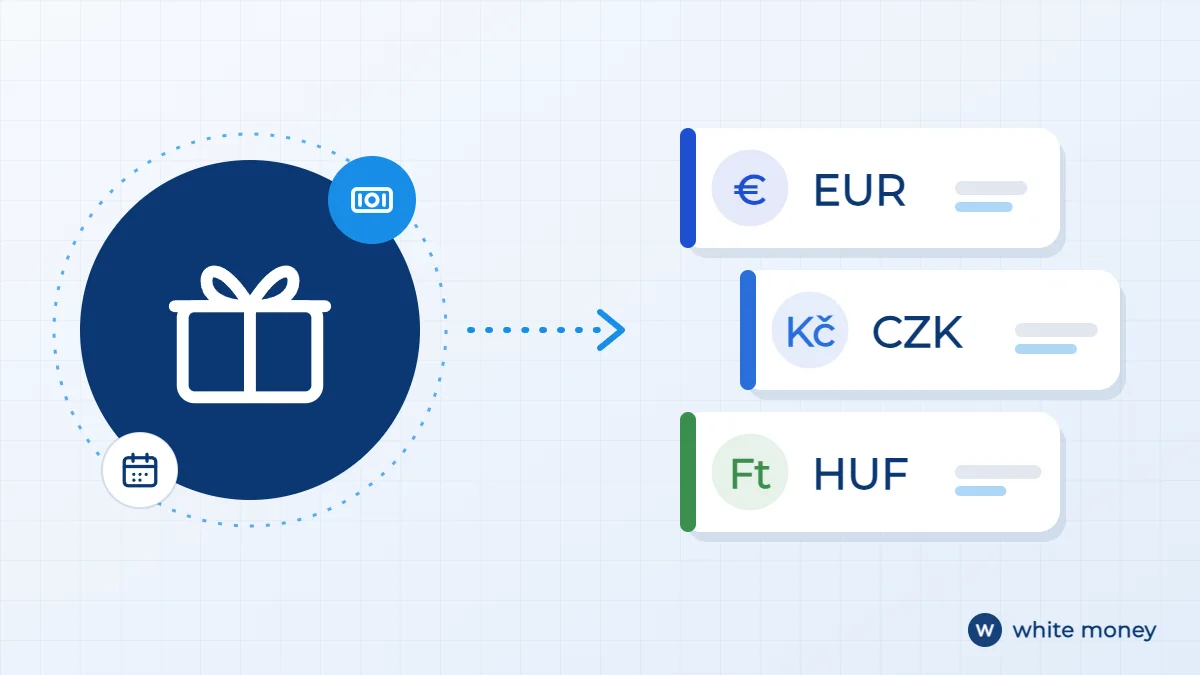
Prague and Budapest: korunas and forints
The Prague market on Old Town Square is one of the closest destinations for Krakow residents. You pay there in Czech korunas. You can read more about the currency itself and how much to take for a short stay in our article a weekend in Prague: which currency.
In Budapest, markets are held on Vörösmarty Square and in front of St Stephen's Basilica, among other places. The currency is the Hungarian forint. Because of the denominations, prices in forints look high, so before you travel it is worth getting used to the conversion, for example with the currency calculator on our website. That way you can instantly judge whether the price of a souvenir or a mug of mulled wine is reasonable, and you will not be caught off guard at the till.
- Do not pay in euros where prices are shown in CZK or HUF if you can avoid it.
- When paying by card, choose the local currency, not Polish zloty.
- Be careful with exchange offices in the most touristy spots and check the rate before exchanging.
Cash or card at the market, and how much to exchange
More and more stalls accept card payments, but not all of them. When it is busy, the queue for the terminal can be long, and some small craft stalls still prefer cash. A sensible approach is to use your card as the main method and cash for small purchases. Cash also helps you control your budget: with a set amount in your pocket, it is easier not to get carried away by the festive atmosphere at the next stall.
Example: if for one day at the market you expect a few drinks, snacks and a small souvenir, exchange an amount that covers these expenses with a small margin. The amounts depend on your plans, and you can check how many zloty you will pay for euros, korunas or forints in the current rates table or in the calculator on our website.
Visiting several cities on one trip, for example Vienna and Budapest? Exchange euros and forints separately instead of counting on paying in euros in Hungary. You will save on conversions and stress at the stall.
Exchanging before you leave Krakow
The most convenient option is to exchange your currency while still in Krakow, calmly and without looking for an exchange office in a foreign city. At the White Money exchange office at ul. Długa 16 you can buy euros, Czech korunas and Hungarian forints. We are open daily from 9:00-21:00, so you can make it even the evening before an early departure.
If you are exchanging a larger amount for a whole group, for example for an organised trip, you can place an order through the "Order exchange" form, and a member of staff will confirm it by phone. For exchanges from 4,000 PLN, we set the rate individually.
Summary
Before you set off for a Christmas market, check the country's currency: euros in Vienna, Dresden, Berlin and Bratislava, korunas in Prague, forints in Budapest. Take your card, but also carry some cash for a mug of mulled wine and small souvenirs. You can check the koruna rate on our page Czech koruna exchange in Krakow, and then we look forward to seeing you at White Money for your holiday currency.