
When Krakow turns grey and cold, many of us go looking for sunshine in Turkey or the United Arab Emirates. Before you pack your suitcase, it is worth thinking about which currency for a winter holiday will be the most convenient: local currency, dollars or euros, cash or card. These choices decide how much you pay for currency conversion and whether you end up without money at the wrong moment.
Below you will find a practical overview of two popular destinations, the role of the dollar and the euro as a backup currency and the key rules for paying by card abroad, including the DCC trap.
Turkey: the Turkish lira and its volatile rate
The currency of Turkey is the Turkish lira (TRY). In recent years its rate has been very volatile and could change noticeably within a few weeks. For a tourist this means one practical rule: do not exchange your entire budget into lira well in advance. It is better to buy a smaller amount to start with, keep the rest in euros or dollars and exchange gradually.
- At all inclusive hotels you need little cash, mainly for tips, small purchases and excursions.
- At bazaars, in small shops and in taxis, cash in lira is very useful.
- In tourist areas prices are sometimes also given in euros, but paying in lira usually gives you more control over the rate.
- Hold on to small denominations, as getting change can be hit and miss.
United Arab Emirates: a dirham pegged to the dollar
In Dubai and Abu Dhabi you pay with the UAE dirham (AED). Its rate is firmly pegged to the US dollar: 1 USD is 3.6725 AED. This makes the dirham predictable, and its value in zloty moves roughly in line with the dollar rate.
Cards are very widely accepted in the Emirates, in shopping centres, restaurants and most taxis. Cash still comes in handy at the souk, for small purchases, tips and at smaller outlets. You can buy dirhams before you leave or take dollars, which are easy to exchange locally.
| Destination | Local currency | Exchange rate behaviour | Backup currency | Cash useful for |
|---|---|---|---|---|
| Turkey | Turkish lira (TRY) | Very volatile | Euro or dollar | Bazaars, taxis, tips, small shops |
| United Arab Emirates | UAE dirham (AED) | Pegged to the dollar | Dollar | Souk, tips, small purchases |
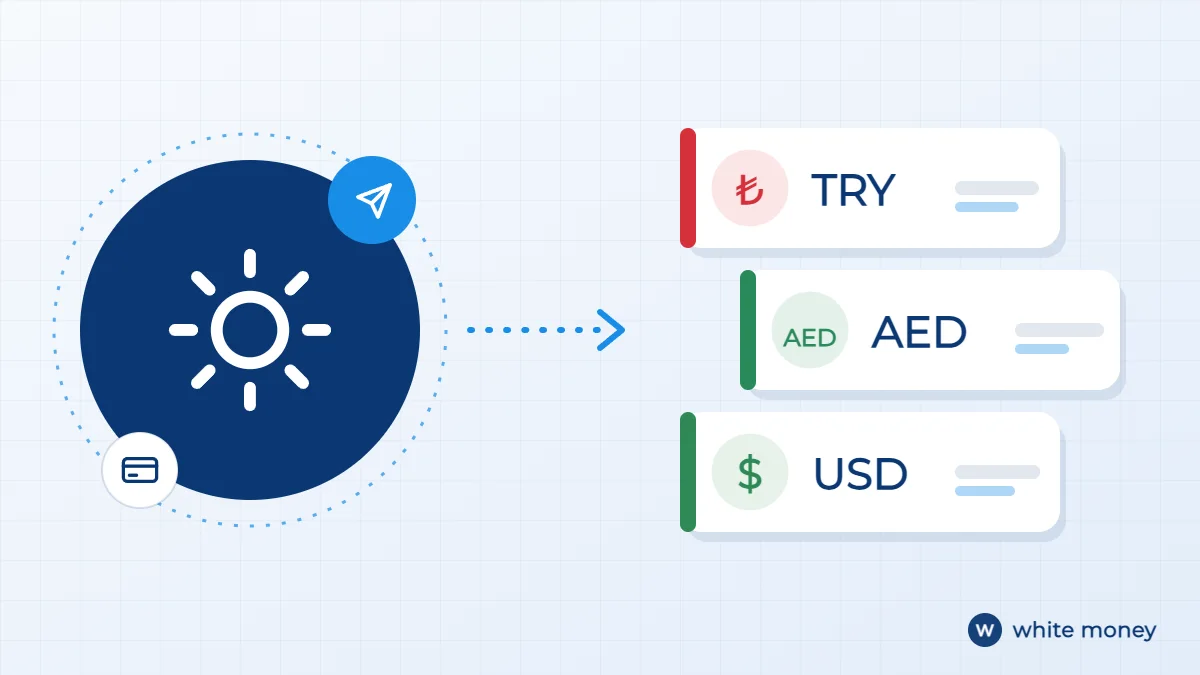
Currency for a winter holiday: dollars and euros as a backup
Whatever your destination, it is worth carrying a small reserve in a currency that is easy to exchange almost anywhere. The US dollar and the euro fill this role best. They come in handy when your card is blocked, the cash machine does not work or the hotel needs to be paid in cash.
Your backup banknotes should be in good condition, without tears or writing, because in many countries exchange offices and shops reject damaged cash. It is better to take a few medium denominations than one large note that is hard to break in a small shop or taxi. Keep the reserve separate from your everyday wallet, for example in the hotel safe.
How to plan it:
- Estimate how much cash you will realistically spend outside the hotel, on excursions, tips, transport and souvenirs.
- Buy part of that amount in the local currency before you leave, so you have money from the very first moment.
- Take the second part in dollars or euros as a backup.
- Plan to pay for the rest by card, keeping in mind the rules described below.
You will find more general advice in the article which currency to exchange before travelling.
Card or cash, and why you should watch out for DCC
A card is convenient and safe, but it is easy to overpay when paying abroad. The most common trap is DCC, dynamic currency conversion. The terminal or cash machine offers to charge you in zloty instead of the local currency. It sounds convenient, but the rate used for DCC is usually less favourable than the conversion done by your bank.
- When the terminal asks about the currency, choose the local one: lira in Turkey, dirhams in the Emirates.
- At a cash machine, decline the "guaranteed rate" and the conversion into zloty.
- Before you leave, check how your bank converts foreign currency transactions and whether it charges a fee.
- Take two cards from different banks and keep them separately.
Turkish lira and dirhams are not as popular as euros, so it is worth reserving them a day or two in advance using the "Order exchange" form. A member of staff will confirm your order by phone, and you can collect your currency before your flight without queuing.
Checklist before you fly
- Buy a small amount of local currency for the first few days.
- Take a reserve in dollars or euros in banknotes in good condition.
- Check the limits and foreign payment settings on your cards.
- Save your bank's helpline number in case your card is blocked.
- Split your cash: some in your wallet, some in the hotel safe.
Summary
The right currency for a winter holiday combines three elements: a small amount in the local currency, a reserve in dollars or euros and a card used wisely, without DCC. In Turkey, exchange lira in smaller portions because of the volatile rate, and in the Emirates, take advantage of the dirham being pegged to the dollar.
You can buy Turkish lira, dirhams, dollars and euros at the White Money exchange office at ul. Długa 16 in Krakow, daily 9:00-21:00. Current rates are in the table on the website, and details on exchanging lira are on the Turkish lira in Krakow page. If you want to be sure your currency is ready, read how online exchange rate reservation works.