
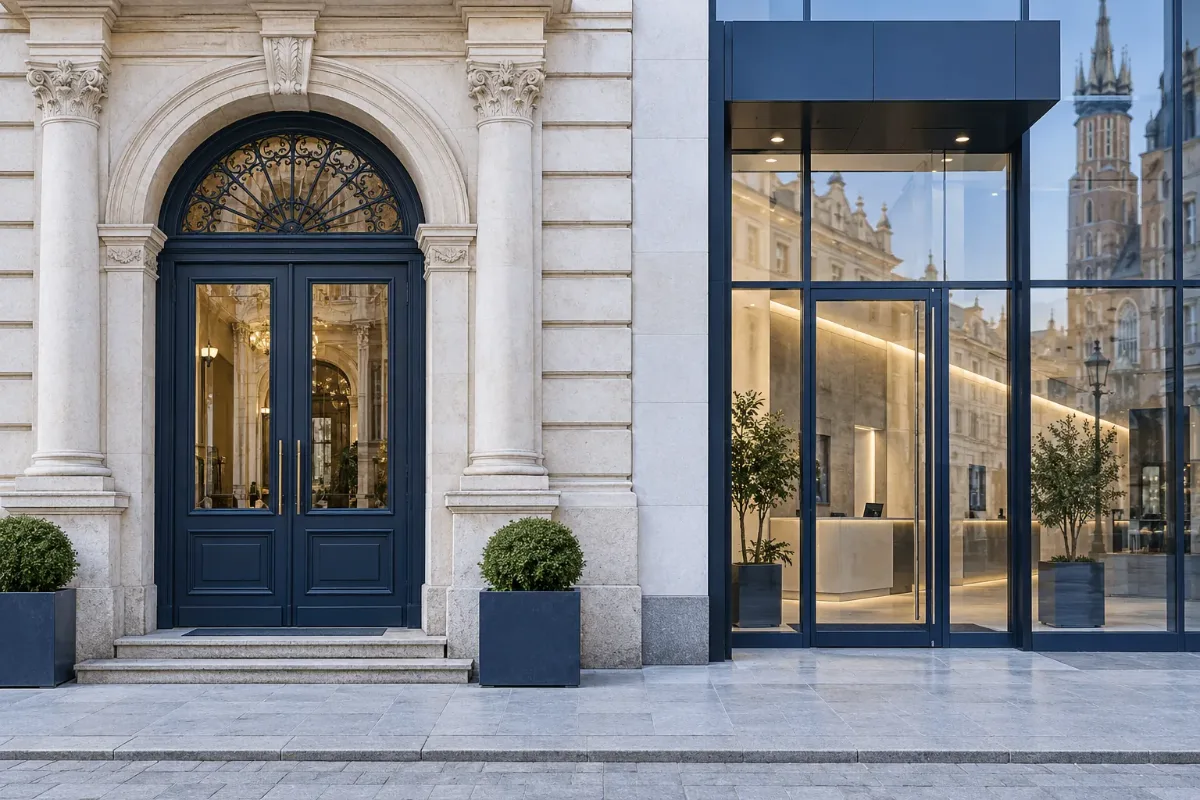
You need currency for a trip, or you want to sell dollars you brought back from abroad. Should you go to a bank or an exchange office? We compare both options in terms of cost, convenience and security to make your decision easier.
Exchange rate: usually better at an exchange office
Banks use their own rate tables, and the difference between the cash buying and selling rate is often much larger there than at exchange offices. An exchange office lives off currency turnover, so it has to compete on its rates. In practice, when exchanging cash, an exchange office in the city centre is usually the cheaper option. We explain how to compare the costs yourself in our article on the currency spread.
Commissions and fees
At a bank, an unfavourable rate may come on top of a commission for a cash transaction or for ordering currency. At an exchange office you pay the rate from the table or an individually agreed rate. Still, it is always worth asking about the full terms before the transaction, wherever you exchange your money.
Currency availability
Bank branches often do not keep cash in less common currencies on site, so it has to be ordered in advance. An exchange office has the currency ready on the spot. White Money offers nearly 20 currencies, and larger amounts can be reserved online. The full list is in the rate table on our home page.
| Criterion | Exchange office | Bank |
|---|---|---|
| Cash rate | Usually better, the office competes on rates | Own rate tables, often a wider gap between rates |
| Commissions | Rate from the table or set individually | Possible fee for a cash transaction or ordering currency |
| Currency availability | Currency on the spot, larger amounts with a reservation | Less popular currencies often need to be ordered |
| Opening hours | Often evenings and weekends too | Usually working days, office hours |
| Cashless transfers | RIA and MoneyGram transfers | A good choice for transfers between accounts |
Opening hours
Most bank branches are open on working days during office hours. The White Money exchange office at ul. Długa 16 is open every day from 9:00 to 21:00, including Saturdays and Sundays. So you can exchange currency after work or on the day you leave.
When a bank may be better
A bank works well for cashless transfers between accounts, for example when you have a foreign currency account and want to send funds abroad. For exchanging cash and quick transactions, an exchange office is usually more convenient. And if you want to send money to family abroad, you can use RIA and MoneyGram transfers at our exchange office.
Security
A licensed exchange office is subject to the same anti-money laundering rules as banks: it verifies identity for larger transactions and issues an exchange receipt. Banknotes are checked on the spot, in your presence.
Whether you choose a bank or an exchange office, ask about the full exchange conditions before you hand over your money.
Conclusion
For exchanging cash in Kraków, an exchange office usually works out better than a bank: a better rate, currency available on the spot and longer opening hours. For large amounts, wholesale exchange with an individual rate gives you an extra advantage. Visit White Money at ul. Długa 16 or see our currency exchange in Kraków page.