

What affects exchange rates, and why do the euro, the dollar or the Swiss franc cost something different today than a week ago? An exchange rate is the price of one currency expressed in another, and like any price it depends on how many people and institutions want to buy a given currency and how many want to sell it. Behind this simple mechanism, however, lie many factors: from central bank decisions to the holiday season at exchange offices.
This article is educational. We do not forecast rates or advise when to buy currency. We want to help you understand where the changes you see in the table and on the chart come from.
The foundation of every rate is supply and demand. Every day the currency market brings together companies paying for imports, exporters selling the euros they have earned, investors, banks, tourists and people sending money to their families. When there are more buyers of a currency than sellers, its price goes up. When sellers dominate, the rate falls. All the factors described below work precisely by changing the demand for a currency or its supply.
Central bank interest rates
Interest rates are one of the most important factors. They are set by central banks: in Poland by the Monetary Policy Council at the NBP, in the euro area by the European Central Bank, in the United States by the Federal Reserve and in Switzerland by the Swiss National Bank.
Higher interest rates in a country can attract capital, because deposits and bonds in that currency yield more. This increases demand for the currency. Lower rates can have the opposite effect. The market reacts not only to the decisions themselves but also to expectations: sometimes the rate moves as soon as there are signals that interest rates might change.
Inflation and the trade balance
Inflation is a rise in the general level of prices. When prices in one country rise faster than in its trading partners, the purchasing power of its currency weakens, which can affect the rate in the longer term. Inflation is also one of the main reasons why central banks change interest rates, so the two factors are linked.
The trade balance shows the difference between exports and imports. A country that exports a lot receives foreign currency and exchanges it for its own, which increases demand for its money. A country that imports more needs more foreign currency. These flows are important, but they usually work slowly and do not explain day to day fluctuations.
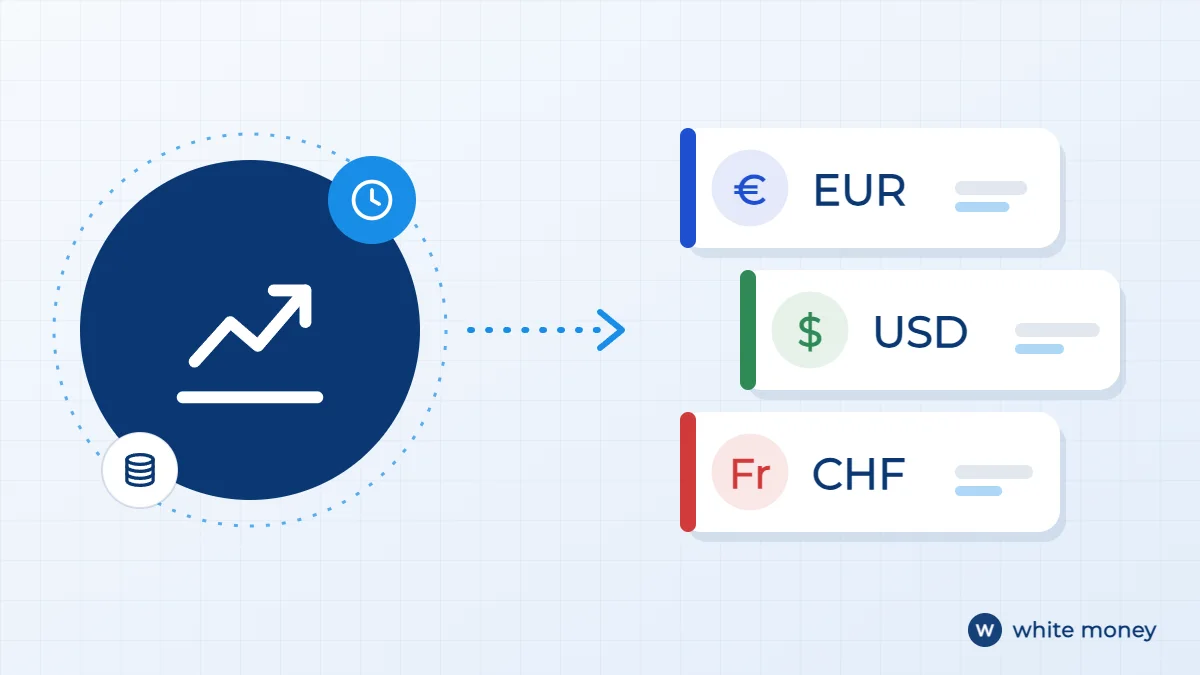
What affects exchange rates in the short term
From day to day, and even from hour to hour, the rate changes mainly in response to information and emotions. The most important short term factors include:
- market sentiment: in times of uncertainty investors often choose currencies seen as safe, such as the US dollar or the Swiss franc, and emerging market currencies, including the zloty, tend to be weaker;
- political events: elections, international tensions, conflicts or changes in the law can quickly change how a country's risk is assessed;
- macroeconomic data: releases on inflation, economic growth or the labour market, especially when they differ from expectations;
- statements by central bank officials: even an announcement alone can move the rate.
| Factor | How it can work | Time horizon |
|---|---|---|
| Interest rates | Higher rates can increase demand for a currency | Medium and long |
| Inflation | Faster price growth can weaken a currency's purchasing power | Long |
| Trade balance | An export surplus increases the inflow of foreign currency | Long |
| Market sentiment | In uncertain times demand for currencies seen as safe grows | Short |
| Political events | Change how a country's risk is assessed | Short and medium |
| Seasonal demand at exchange offices | Affects the availability of cash and traffic at the cash desk | Short |
Seasonal demand at exchange offices
The exchange office rate is based on market rates, but it is also influenced by the situation at the cash desk. Before the summer holidays and festive periods many people buy euros, dollars or pounds, and after the season some of them come back to sell unspent cash. The exchange office has to keep an adequate supply of banknotes, especially of less popular currencies. That is why in busy periods it is worth reserving currency earlier and ordering less popular currencies a day or two before collection.
The calendar also affects seasonal traffic: long weekends in May, winter school holidays or Christmas markets in neighbouring countries mean that many people need the same currency within a short time. The exchange office publishes two rates: buy and sell. The difference between them is the spread, which you can read more about in our article the currency spread: buy and sell rates.
Nobody can reliably predict the rate, so instead of waiting for the "perfect moment", consider exchanging a larger amount in several parts. The 24 hour, 7 day or 30 day rate chart on the exchange office website will help you see how the price has changed, but it does not tell you what will happen tomorrow.
Summary
Exchange rates are affected by interest rates, inflation, the trade balance, market sentiment, political events and seasonal demand. Some of these factors work over years, others within a single day. Understanding them helps you look at changes in the table more calmly, but it does not let you predict the future. Remember that this is educational material, not investment advice.
When you need euros, dollars or francs, check the current rates at the White Money exchange office and find out how to read the exchange office rate table. You can reserve your exchange online and collect it at ul. Długa 16 in Krakow, daily 9:00-21:00. You can read more about the service on our currency exchange page.